The town afar, Covadonga, where fifty-five reside
Statue of Maria, her radiance, a timeless guide
Here I stayed, seven days, my spirit held inside
Told of Pelayo, who fought the Moors, with furious pride
Victory won, a nobleman, crowned king upon the tide
Of Iberian kingdoms, their banners, flung out wide
Spain, Portugal, to the borders where the French abide
Lineage traced to Pelayo, the royal bloodline's stride
Power confirmed, the King's mission blessed in this sacred space
Perpetuation of rule, bound to Holy Mother's embrace
Through crusade against the heretic, aid from God none could replace
Unification by the Cross, hung high in hallowed grace
Of miracles and holy relics, forged for the ruler's mace
Divine authority and faith, surging through the cave's dark face
And so I write to you, that we might together trace
Monarch and mystery, what shaped their eternal interlace?
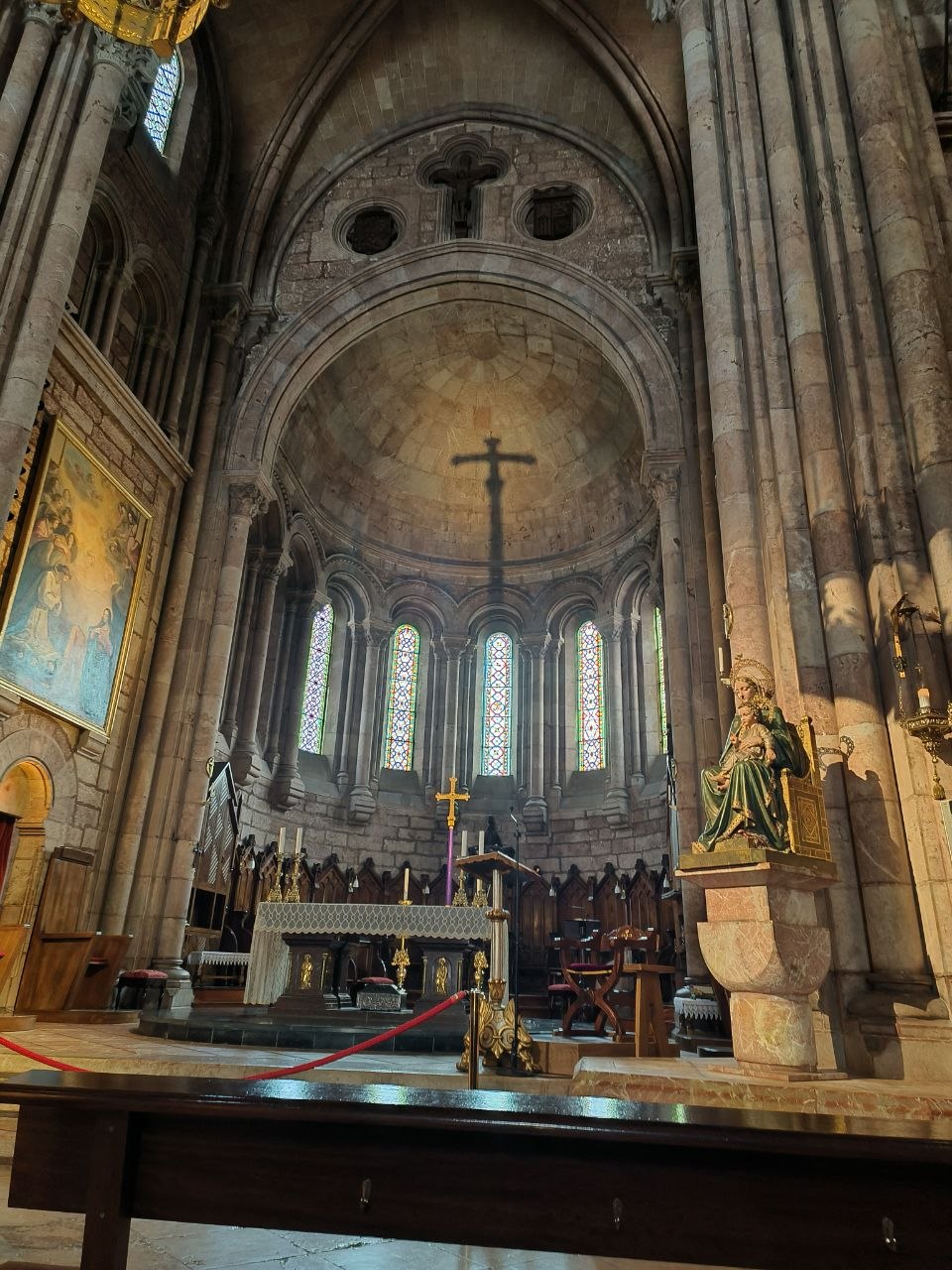
The Shadow of Faith
In March 2025, I found myself in the mist-heavy mountains of Asturias.
The moment I stepped inside the Basilica of Santa María la Real, I witnessed something striking: against the curved stone, the shadow of the cross began to stretch. It sharpened into a silhouette that resembled the blade of a sword.
It felt less like a coincidence and more like a statement. This single image defined my impression of the place: Covadonga is a sanctuary where the divine and the monarch fused; where power is both verified and disguised by faith.
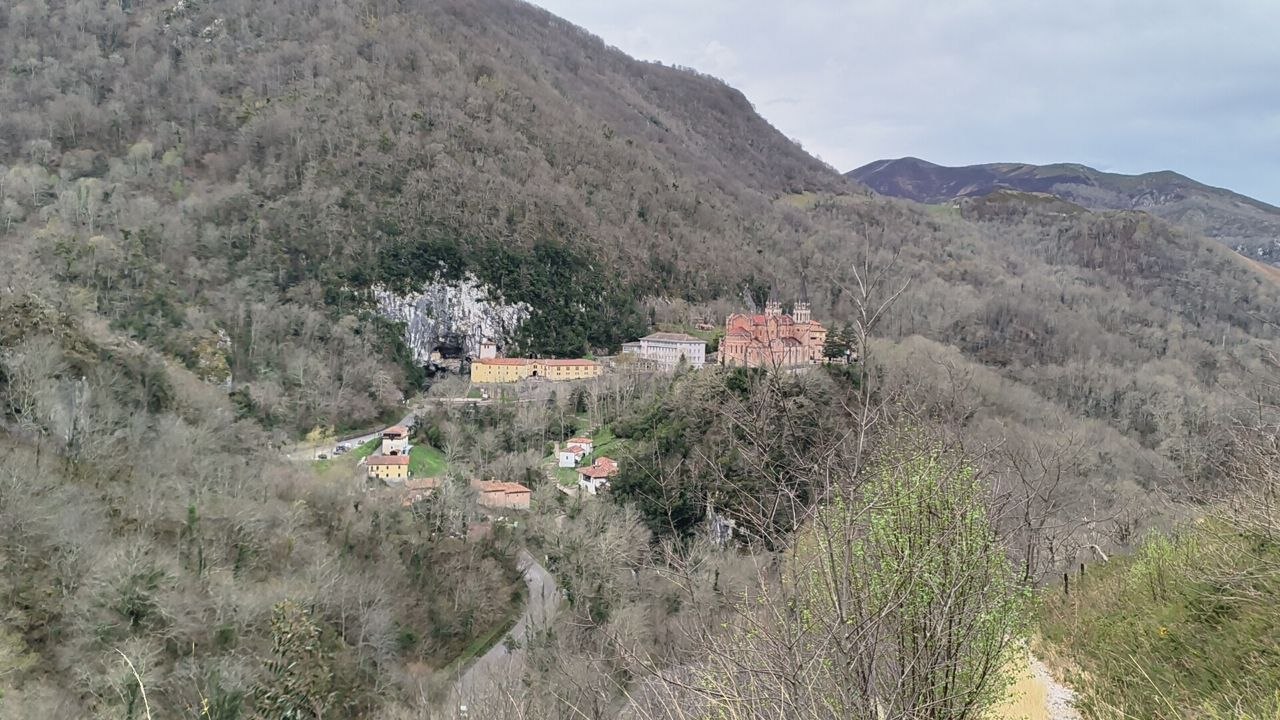
The Cradle of Kings
I hiked up a nearby mountain and paused halfway to look back at Covadonga. The village, nestled within the Picos de Europa mountains of northern Spain, is remarkably small, with only fifty-five permanent residents. Yet, despite its size, it remains a renowned destination for tourists and pilgrims alike. It is the birthplace of the Spanish kingdoms.
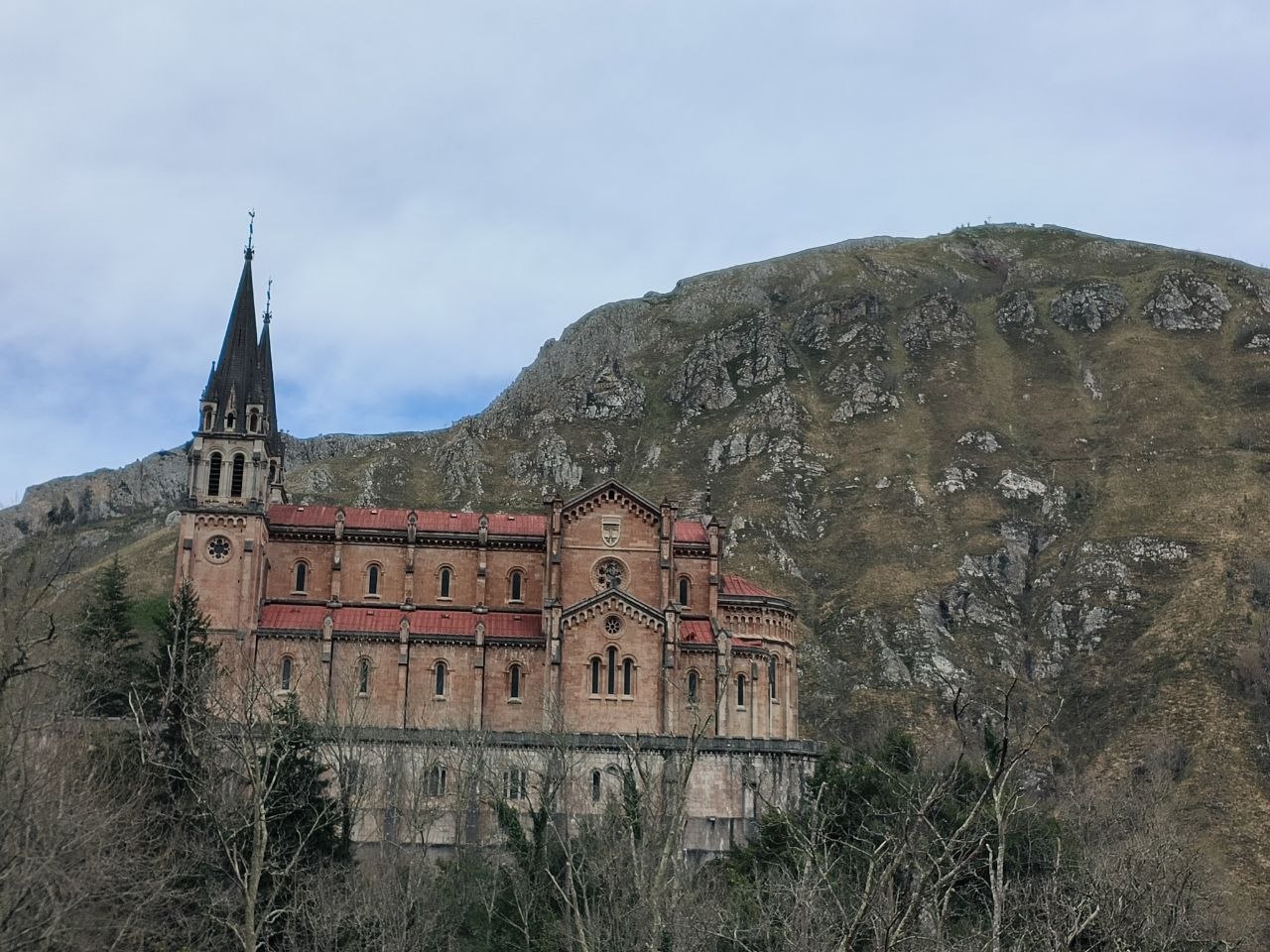
The Rose of the Mountains
On the day I reached the village, I stepped off the bus and immediately looked upward. There, presiding over the valley from its hilltop perch, stood the Basilica of Santa María la Real.
Architecturally striking in its Neo-Romanesque style, the cathedral is constructed from local pink limestone. The stone's unique hue gives the massive structure a soft, ethereal quality, making its presence feel surprisingly gentle and embracing against the rugged, green backdrop of the Asturian peaks.
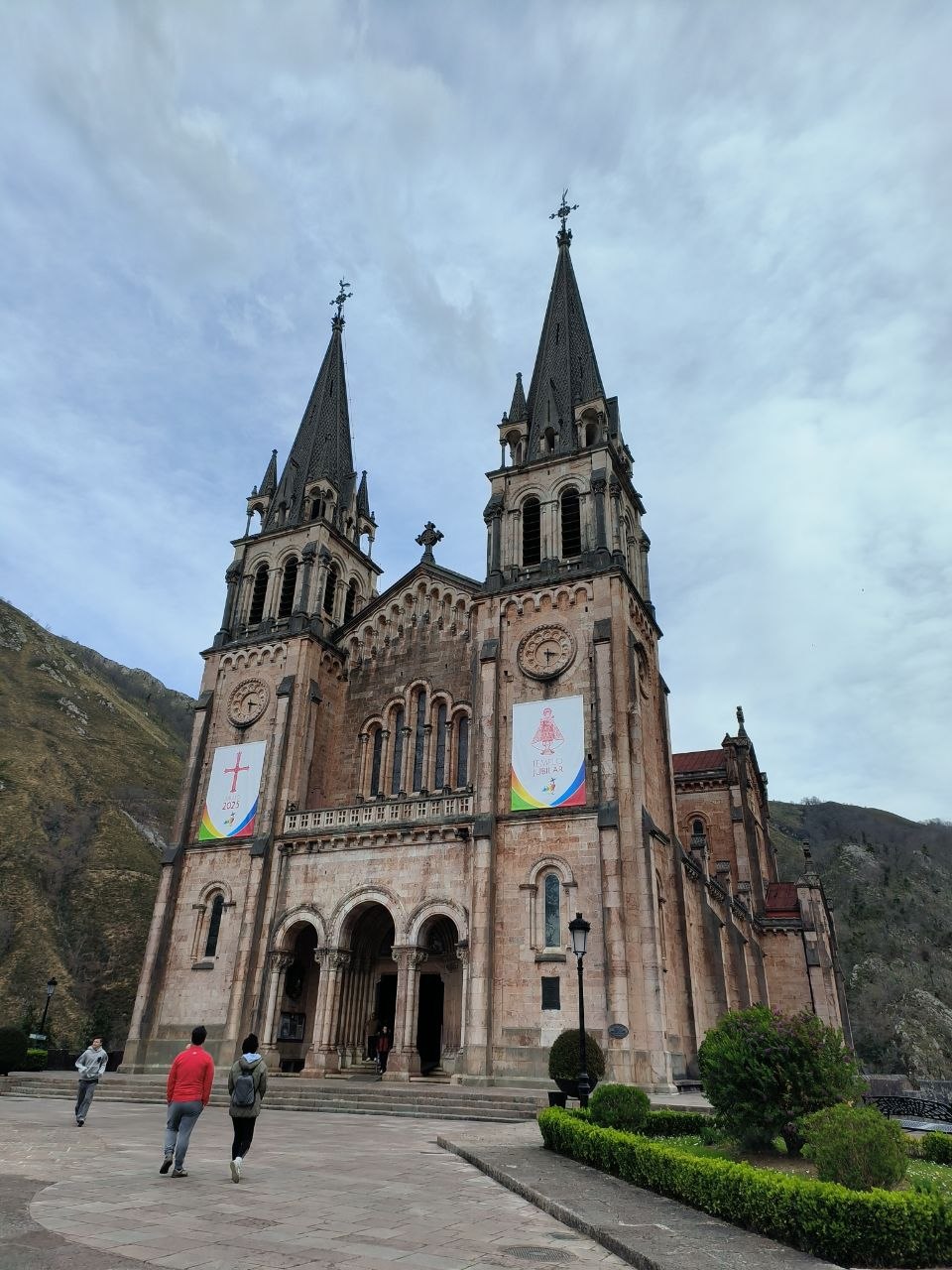
A Sanctuary Reborn from the Ashes
As I climbed the stone stairs toward the Basilica of Santa María la Real, I realized the history beneath my feet was more layered than I had first imagined. The site felt ancient, yet the grand structure before me was younger than I had expected, rising from the earth between 1877 and 1901.
Its existence is a testament to resilience. In 1777, a devastating fire swept through the old temple that once stood adjacent to the Holy Cave. In the wake of the smoke, a vision was born to raise a monumental sanctuary that would honor "La Santina" on a grander scale. It wasn't an easy path; the local council initially resisted, hoping instead to rebuild the simpler temple within the cave or to finally complete a massive, unfinished design by Ventura Rodríguez.
But the spirit of the new sanctuary prevailed, fueled by donations that poured in from every corner of Spain. As I stood before its pink walls, I realized I wasn't just looking at a building—I was looking at a collective act of devotion, a mountain of stone built to replace what the flames had taken.
The Secret Path to the Shrine
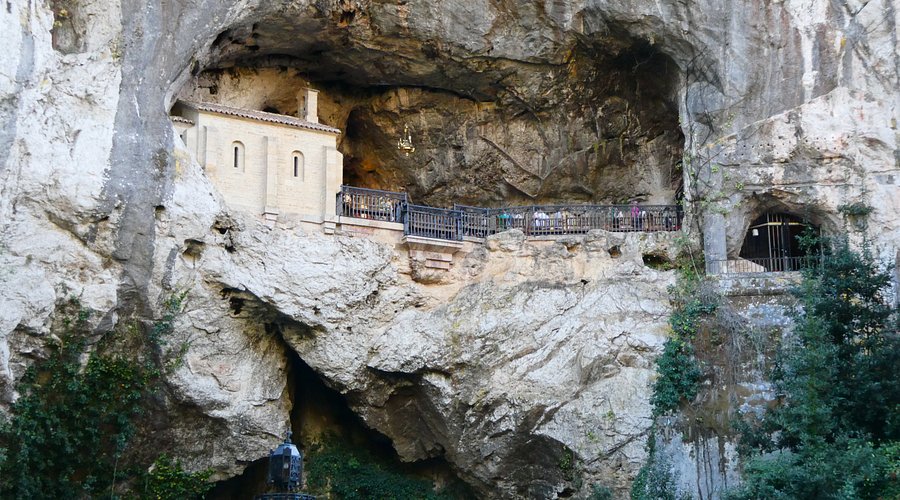
Walking through a tunnel carved directly into the mountain, I reached the heart of Covadonga — the Santa Cueva, the Holy Cave, where the statue of Our Lady of Covadonga rests.
This cave was the original site of the church, the very place where the first battle of the Reconquista began in 718. Tucked within the cliffs of Cangas de Onís, it remains the true soul of the Picos de Europa.
The Painted History of the First Battle
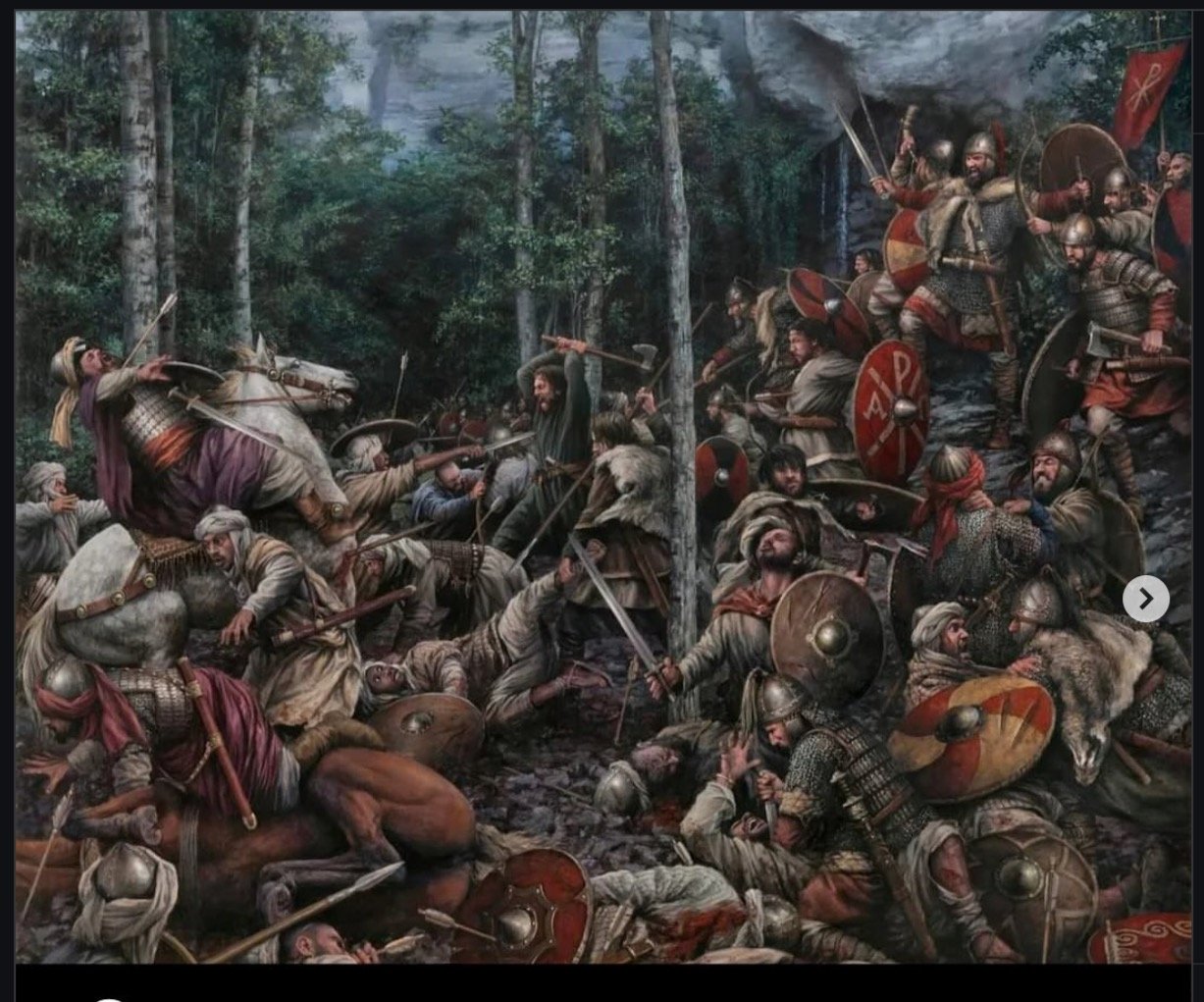
Inside the Covadonga museum, I found myself standing before a recent painting that brought the valley's history to life. It was a vivid illustration of the Battle of Covadonga, fought sometime between 718 and 722. In the frame, the Visigothic nobleman Pelayo led his men to a victory against the Muslim army, a moment often cited as the first successful resistance of Christian forces against Islamic expansion on the peninsula.
Modern historians might describe this event as a relatively small-scale engagement, but looking at the canvas, it felt like so much more. Over the centuries, this clash in the valley has been transformed from a mere skirmish into a sacred symbol of revival. It wasn't just a battle; it was the birth of a legend that would shape the identity of a nation.
The Architecture of Authority
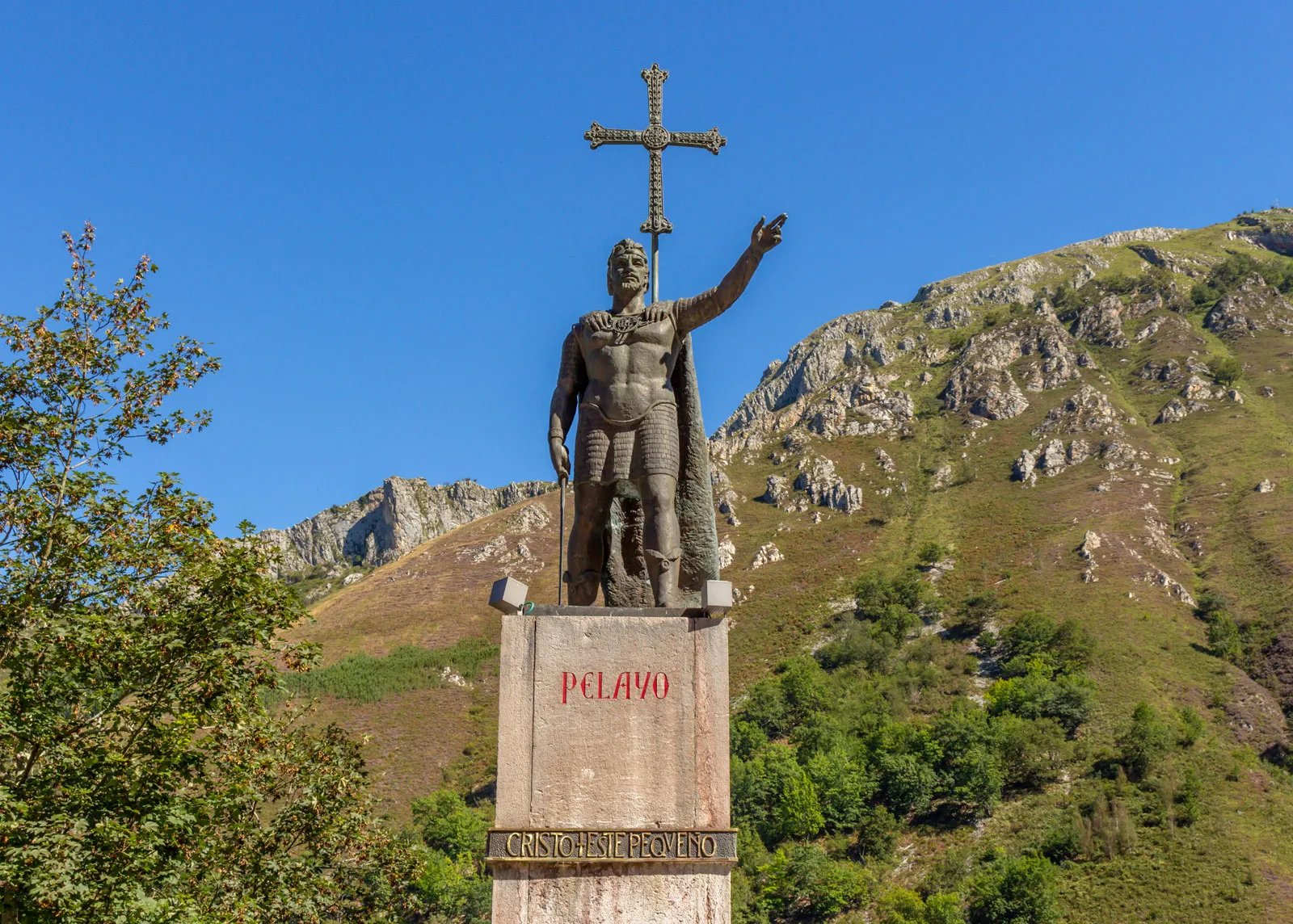
Standing before the statue of Pelayo, I found it easy to see how the man became the monument. After the battle, he was crowned the first monarch of the Kingdom of Asturias, positioned as a direct continuation of the fallen Visigothic Kingdom and the foundation for the future powers of León and Castile.
The narrative of his victory was meticulously shaped by early chroniclers, such as those of the Codex Albeldense (also known as the Codex Vigilanus). They framed the event as "divine intervention," a perspective that endowed Pelayo's rule with a sacred quality. In this version of history, the Virgin Mary herself appeared to protect the forces at Covadonga, turning a military success into a miraculous one.
As I explored the history further, the pattern of "divine mandate" became clear. The Asturian monarchs reinforced their authority through elaborate coronation ceremonies and ecclesiastical support, effectively inheriting the spiritual legitimacy of their Visigothic predecessors.
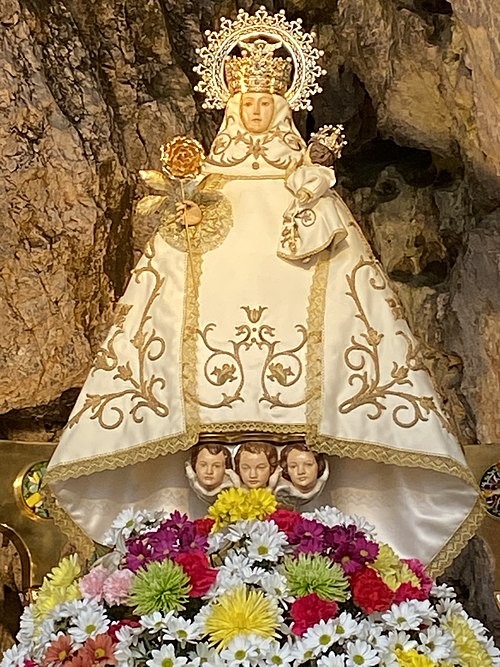
Our Lady of Covadonga, also named "La Santina", is a title of the Blessed Virgin Mary and the name of a Marian shrine devoted to her at Covadonga, Asturias.
If this was worth a few dollars to you, the jar is here. Either way, thank you for reading.
Leave a comment